
Millard Projected and Actual Release
A projected or scheduled date describes what should occur if the controlling facts remain unchanged. The actual release date and time record when a jail or prison truly relinquished custody. Utah adds a third date category: a tentative Board hearing date. A hearing date only marks review. An ordered parole date reflects a Board decision but can still be changed. The completed release event comes later and should be checked against the person's UDC location or the Millard County Jail record.
Pretrial custody follows a different path. A person held at Millard County Jail before case disposition has no sentence-based release date to calculate. Bond, recognizance, dismissal, a court release order, a hold from another authority, or sentencing may change the result. Even after a judge signs an order, jail processing may take more time. A local jail record supplies the actual timestamp and destination. A transfer to UDC, another county, USMS, or ICE ends the Millard custody event but is not community release.
- Tentative hearing date
- A calendar date for Board review, not an order to release.
- Ordered parole date
- A future effective date set by the Board and still subject to change.
- Actual release
- The completed event when a custodian releases or transfers the person.
- Detainer
- A request or legal hold from another authority that may prevent release home.
Find Millard Projected Release Dates
Start with legal custody, not the building alone. Millard County Jail holds ordinary local detainees and some UDC prisoners under contract. A state prisoner housed there remains in UDC custody, so the statewide corrections and Board records control the prison release date. A local detainee or county-sentenced inmate follows the jail and court route. The broader named-person search is available on the Millard County release records home page.
- Determine whether the person is a local detainee, county-sentenced inmate, UDC prisoner, or federal or immigration detainee.
- For UDC custody, open the official offender search and find the exact person by name or offender number.
- Read the field labeled
Release Date/Type. Do not rename it or treatN/Aas a denial. - Search the Board's decisions for the ordered date, decision text, contingencies, and any later rescission.
- For local custody, call Millard County Jail and review the sentencing or release order in the correct court docket.
- After the date passes, confirm the actual status with UDC, the Board, or the jail record.
For a Millard jail event, call 435-743-5302 with the full name, date of birth, and approximate booking date. Ask whether the person is still held, what actual date and time ended that booking, what release type was entered, and whether another agency received the person. Staff may limit disclosure. A focused GRAMA request can then seek the releasable booking and custody record. For a court basis, search both justice and district court when charge level is not known.
Note: Millard's jail address can house two legal custody types, so the person's custodian must be identified before calculating any date.
Millard UDC Release Date Field
The UDC Offender Search uses the exact label Release Date/Type. A future result may show a date followed by Parole date. Other records may show N/A. After release, a community record can list Location: PAROLE, Housing Facility: N/A, and again show Release Date/Type: N/A. This is why the Board's dated order is the durable record of the ordered date.
UDC results also display offender number, name, date of birth, location, housing facility, case manager, and case manager email. The public search only covers people currently under UDC supervision. It does not include ordinary unsentenced Millard detainees, and a fully discharged person may no longer appear. A named county jail under location can indicate a contracted state placement. It does not convert the state prison term into a local jail sentence.
| UDC field | How to read it |
|---|---|
| Location | Current UDC category or placement, including PAROLE or PROBATION. |
| Housing Facility | Physical state placement; N/A can appear for community supervision. |
| Release Date/Type | A supplied date and type, such as Parole date, or N/A. |
| Case Manager | Current UDC contact field where publicly supplied. |
The official UDC search interface is captured below with its name and number search paths.
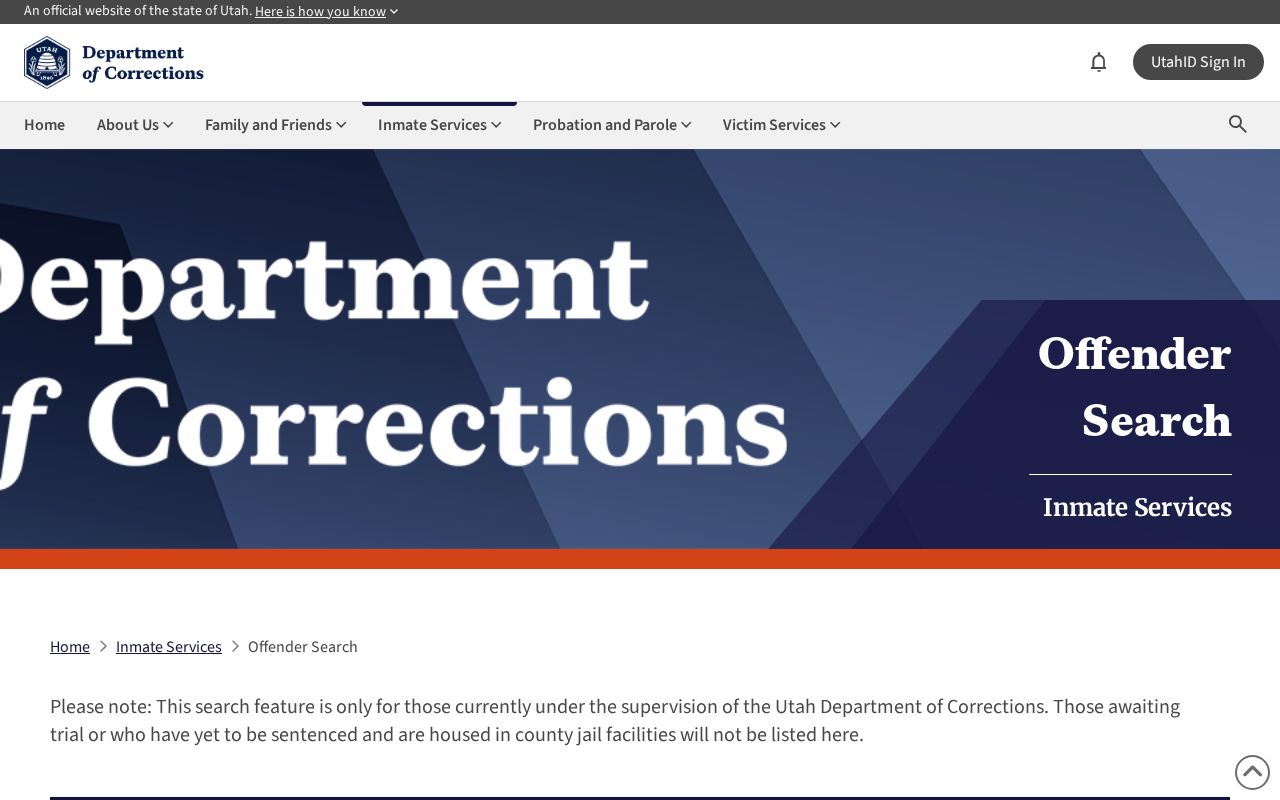
The interface is the right route for current UDC supervision, while Board decisions preserve the ordered parole date and its later changes.
Utah Sentences Shape Millard Releases
Utah uses indeterminate state prison sentences. Under Utah Code section 77-18-111, a court imposes a statutory range rather than a single universal release day. The Board combines concurrent and consecutive sentences into the applicable total and makes an individual release decision within the governing law. Concurrent terms run together, while consecutive terms run one after another. Offense-specific limits and Board restrictions may also apply.
No current official source in the Millard research supports a general rule that every Utah prisoner serves about 85 percent. That figure should not be imported from federal practice or another state. Utah's actual framework uses minimum and maximum terms, sentence aggregation, Board review, contingencies, and earned time. A particular offense can have its own mandatory minimum or restriction, but that does not create one statewide percentage formula.
Millard Earned-Time Release Credits
Utah Code section 77-27-5.4 requires a UDC earned-time program. The current law provides at least four months of credit for completion of each of up to two approved programs recommended in the person's case action plan, normally up to eight months of mandatory program credit. The Board may grant added discretionary earned time. UDC reports qualifying completion, and the Board applies credit to an existing release date.
Credit is not automatic merely because a person attends a class. Limits include insufficient time before an existing release date, life without parole, an order to serve to expiration, no current release date, unmet release contingencies, and other circumstances stated in current law. Credit may also be forfeited when the Board determines that a rescission hearing is needed. A person with no release date may receive recognition for later Board review without an immediate date change.
Millard's local detail is R-Hope, an approved male intensive outpatient substance-use program at the county jail for qualifying UDC prisoners. The UDC Jail Programs book describes 18 seats. Participation does not prove eligibility, completion, credit, or release for any named person. It also does not apply to an ordinary local pretrial detainee simply because both groups can be housed in Millard County Jail.
Millard County Jail Date Credits
County-jail good behavior credit follows a separate law. Utah Code section 76-3-403 addresses qualifying misdemeanor and certain county-jail commitments and includes statutory exclusions. The precise calculation depends on the current text, the sentence, and the jail's application. Verify it with Millard County Jail and the sentencing court. Do not apply the UDC program-credit formula to a short local sentence.
This distinction prevents a common date error. A county sentence and a state prison term can both be served physically at the Millard building, but they use different legal rules. The booking record, court judgment, offender number, and named custodian show which framework applies. If UDC holds the person under its contract placement program, use UDC and Board records. If the commitment is local, use the jail and court calculation.
Note: A program at Millard County Jail does not make every person there eligible for UDC earned-time credit.
Why Millard Release Dates Change
Future dates move for several distinct reasons. Utah Code section 77-27-9 allows the Board to rescind a prison release date before actual release. A new charge, institutional discipline, an unmet contingency, or a release-plan issue may prompt review. Sentence aggregation can also alter the controlling term. In local custody, a court order, a new hold, or a corrected good-behavior calculation may change the expected date.
| Factor | Possible effect | Best record |
|---|---|---|
| Board rescission | Cancels or delays a future parole date | Board decision or order |
| Earned time | May reduce an existing UDC date | UDC report and Board action |
| Unmet contingency | Prevents planned release | Board decision details |
| Concurrent or consecutive terms | Changes the total sentence range | Judgment and Board calculation |
| Detainer or transfer | Changes destination, not always release home | Jail or UDC movement record |
| Data lag | Public display trails the operating event | Originating agency confirmation |
When more than one factor applies, use the newest dated order and then check current custody. A calculation is only as reliable as its sentence and hold information.
Utah's Millard Release-Date Quirk
The public UDC field is not called “projected release date.” It is Release Date/Type, and the type may read Parole date. That date can later disappear from the community result, which may show PAROLE and N/A. At the same time, the Board can rescind the ordered date before release. The strongest chain therefore joins the ordered Board date to the UDC status observed after that date.
Keep each record in its role. The Board order proves what was ordered. UDC location shows current supervision or placement. The jail record proves a local completed custody event. A VINE alert can warn of a change, but it is not the original order. The Millard County VINELink inmate search can help monitor a pending move or release while direct agency confirmation remains necessary.
Confirm Millard Actual Release Dates
Once a date passes, search the same UDC record again. For parole, look for Location: PAROLE and compare it with the Board's effective date. If the record still shows prison or county placement, check for a later decision or data lag. For a Millard County Jail case, request the actual release date and time, release type, and receiving authority. The docket explains the legal basis, but it may not match the minute when jail processing ended.
Federal and immigration custody require different systems. A BOP future release date is projected and may change, while a past BOP date with no facility can show release from BOP custody. ICE has a shorter released-person visibility period. A Millard record naming USMS or ICE as the recipient documents transfer out of county custody, not return to the community. Always follow the receiving authority.
Keep the date, source, and custody type together when saving a result. That small record prevents a future parole date from being mistaken for a jail release timestamp.
Note: The actual date answers when one custodian released the person, but the destination determines whether confinement truly ended.