
Millard County Release Meanings
A Millard County release record describes the end of one custody event. It does not say that every case, sentence, or duty has ended. A local detainee may leave Millard County Jail on bond, on personal recognizance, after time served, or under a court order. A court can also impose probation, which is a community sentence supervised under court authority. State prisoners may be paroled, meaning they leave prison under conditions set by the Utah Board of Pardons and Parole.
Other exits are not community releases. A transfer may send someone to the Utah Department of Corrections, another county, the U.S. Marshals Service, or immigration custody. A detainer is a request or legal basis for another authority to take custody when the current hold ends. A dismissal describes the case outcome, but the jail record supplies the actual time custody ended. Sentence expiration and Board termination also differ from parole because they may end the sentence or supervision rather than continue it in the community.
| Recorded event | Meaning | Next record to check |
|---|---|---|
| Bond or recognizance | County custody ends while the case may continue | Jail release record and court docket |
| Time served | Credit or term completes the named confinement | Jail record and sentencing entry |
| Parole | Conditional state-prison release | Board order and UDC Location |
| Probation | Court-ordered community supervision | Court order and UDC Location when listed |
| Transfer | Custody moves to another authority | Receiving agency's system |
Millard County Release Record Fields
The strongest local record ties a named person to one booking. It gives the actual date and time Millard County Jail relinquished custody, the release type or code, and the destination or receiving authority when one exists. Charges and court case numbers connect that physical event to the court's legal action. Bond details, the release authorization, property notation, and booking photograph may sit in separate record modules, so a focused request should name them.
| Field | What it shows |
|---|---|
| Booking number and date | The exact custody episode, distinct from earlier or later bookings |
| Actual release date and time | When Millard County ended that custody event |
| Release type or code | Bond, time served, court order, transfer, or another recorded reason |
| Receiving agency or destination | Whether the person entered another custodian's control |
| Charges and case numbers | The court matters linked to that booking |
| Release authority | The order or legal basis used to end custody |
| Property and photograph | Related booking materials that may require a specific request |
The reason must be read as written. “Not here” confirms only that the person is not currently held at the jail. It does not distinguish a return home from a transfer. Ask whether the last event was community release and whether another agency received the person. That one follow-up question often determines the right search system.
Millard Jail Release or Transfer?
Millard County Jail has a rare mixed role. The UDC Jail Programs book reports 107 total beds, 64 contracted beds, and 45 available for Corrections prisoners. A person can be housed in the same Fillmore building as a local detainee while remaining a state prisoner in UDC legal custody. Physical departure alone is therefore weak proof of community release.
For a local booking, the Millard jail event and court docket provide the best pair. For a contracted UDC prisoner, read the statewide offender record, a Board order, and any VINE movement notice. A new Housing Facility can mark placement at another site. `Location: PAROLE` after an effective Board date is stronger evidence of community supervision. Staff or records should also identify the receiving authority when the departure was a transfer.
Those figures describe capacity and contract use, not a current headcount. They explain why custodian and destination matter in every Millard County released inmate check.
Note: A contracted bed count explains possible state custody, but it does not identify the status of any named person.
Request Millard County Release Records
No official Millard County historical release archive was verified. The county's GRAMA instructions direct a requester to send the state form to the office that holds the record. Jail and booking material should go to the Millard County Sheriff's Office and Jail at 765 South Highway 99, Fillmore, UT 84631, by calling 435-743-5302 for routing.
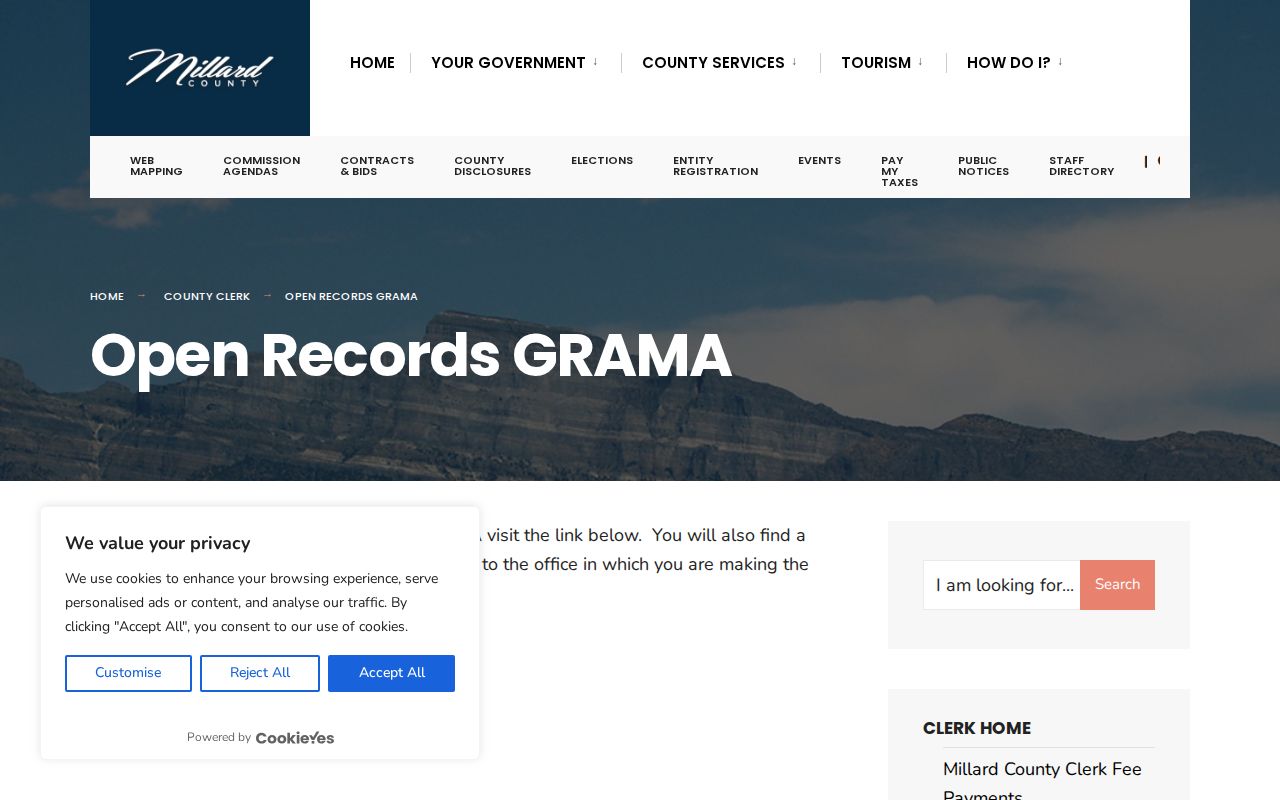
The county page establishes the official request route even while no searchable Millard County release archive is available.
- Identify the person by full legal name, date of birth or another identifier, and any name variants.
- Give a narrow booking date range and the booking number when known.
- Ask for booking and release date and time, release type, destination, linked charges, case numbers, authority, property notation, and booking photograph.
- Request electronic copies and an advance fee estimate. Ask for the GRAMA classification and statutory basis if any part is withheld.
- Ask for any reasonably segregable public portion. That means public fields separated from protected content.
Utah Code § 63G-2-204 requires a written request to the entity retaining the record. It calls for the requester's name, mailing address, willing email, daytime telephone, and a reasonably specific description. The current law provides an ordinary response structure that includes action within ten business days. A five-business-day public-benefit route exists, but extraordinary circumstances and later law can alter timing.
GRAMA § 63G-2-203 permits reasonable qualifying actual-cost fees and provides waiver rules. Millard County publishes no sheriff-specific release-record fee schedule in the sources reviewed. A request is not guaranteed free. If access is denied, ask for the written basis and use the administrative appeal process.
Expunged Millard County Release Records
Expungement seals government records of a case. Starting January 1, 2026, Utah Courts identifies qualifying cases for automatic expungement without the former person-initiated request. An expunged case drops out of public Xchange. Sealed cases, juvenile matters, other nonpublic files, and some older or unconverted justice-court cases may also be missing.
A blank search is not proof that no Millard County booking occurred. It may reflect lawful limits or gaps in the public system. Government expungement also does not erase every copy that was retained outside the court system. When lawful access exists, the record subject may have routes not open to the public, including qualifying subject access or a certified order.
Find Millard County Released Inmates
Begin with the custody episode, not a broad name result. Millard pretrial and county-sentenced bookings lead to the jail record. State-sentenced or contracted prisoners lead to UDC and the Utah Board. A federal commitment leads to BOP, while immigration custody leads to ICE. Court records explain the legal outcome but do not replace the physical release timestamp.
- Call the Millard County Jail with the full name, date of birth, and approximate booking date. Ask about present custody, actual release time, release type, and destination.
- File a focused GRAMA request when phone disclosure is limited or the event is old.
- Search UDC for a state prisoner, parolee, or probationer. Then match parole with the Board's decision and effective date.
- Check Utah Xchange in district and justice courts for the order, plea, disposition, sentence, or later supervision event.
- Use Utah VINE as a supplemental status or alert source, then verify the event with the originating agency.
- Move to BOP, ICE, or PACER when the release record names a federal authority.
A released person normally leaves a live jail roster because that roster tracks current custody. Millard County currently provides no verified public live roster or release archive. An old release is instead preserved through the historical jail record, the court disposition, a Board order, or the system that kept supervising the person.
Note: Search one booking at a time because the same name can appear in several unrelated custody events.
UDC Millard Release Search
The Utah Department of Corrections Offender Search covers people currently under UDC supervision. It can show a state prisoner, parolee, or probationer. It excludes ordinary county detainees awaiting trial or not yet sentenced, and it is not a permanent archive of people who have fully discharged.
| Search or result field | How to use it |
|---|---|
| First and last name | At least one character of each is required; middle name is optional |
| Offender number | Use when known to reduce same-name errors |
| Location | `PAROLE` or `PROBATION` identifies current community-supervision status |
| Housing Facility | Shows the placement site; `N/A` can appear for community records |
| Release Date/Type | May show a future date and `Parole date`, or `N/A` |
| Case Manager | May provide a name and email for the current UDC record |
The exact field name is `Release Date/Type`. A future `Parole date` is scheduled, not accomplished. Utah Code § 77-27-9(3) lets the Board rescind a prison release date before release. Confirm an effective Board order, wait until the date passes, and then check for `Location: PAROLE`. A fully discharged person may later vanish from this current-supervision search.
The official UDC screen shows how the name and number options are presented.
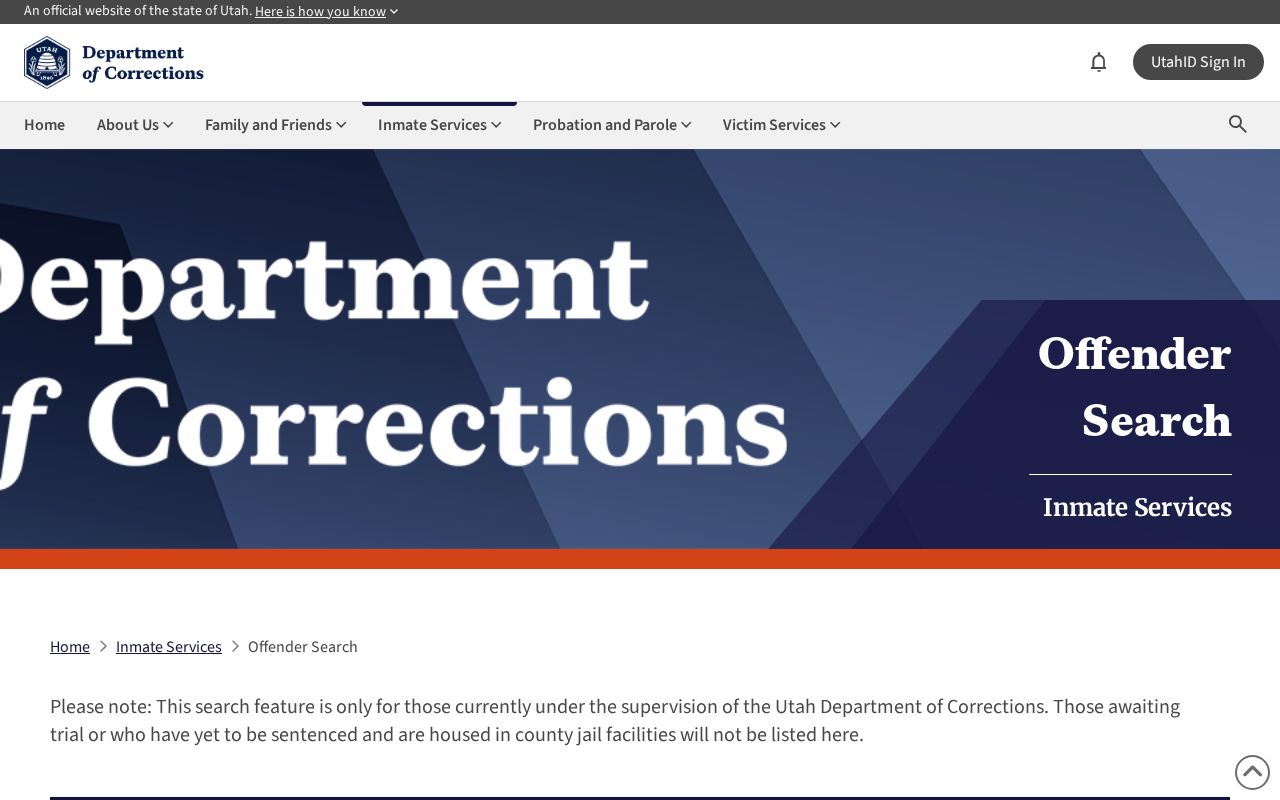
Use those labels literally, then pair the result with the Board order or Millard County release record that applies to the custody event.
Millard County Release Feed Gap
No operational official Millard County current roster, historical booking search, or recent-release page was found on the research date. The sheriff domain was in maintenance mode. That means a 24-hour or 72-hour official window, update schedule, photo display, and retention period cannot be verified. A commercial directory or a roster from another Utah county cannot establish a Millard release.
For a recent event, call the jail first. Ask for the actual date and time, type, and receiving agency. If staff say only that the person is not there, ask whether the person went to the community or another custodian. Then submit a date-bounded GRAMA request and match the result to the court, UDC, BOP, or ICE system named in the response.
The official Millard County sheriff page supplies the stable jail contact.
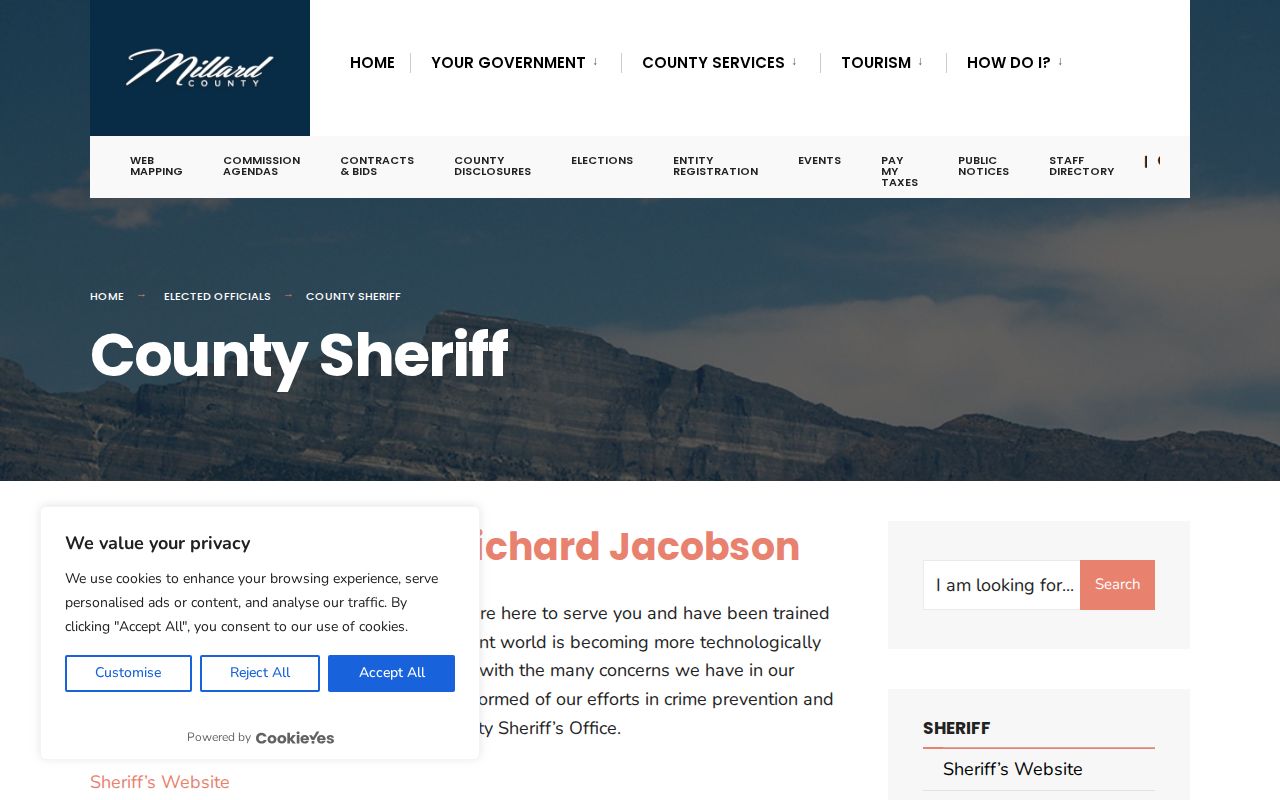
That official contact, rather than an unofficial directory, is the starting point for the actual release time and destination.
Courts Behind Millard Releases
Millard's court geography can split one search across several offices. East Justice Court sits in Fillmore, while West Justice Court is in Delta. Justice courts handle most class B and C misdemeanors, infractions, ordinances, and traffic matters. Felonies and class A misdemeanors go through Fourth District Court in Fillmore. The filed charge and court tier, not the arrest site alone, determine where the durable case event appears. The county court directory shows the two justice-court offices and their schedules.
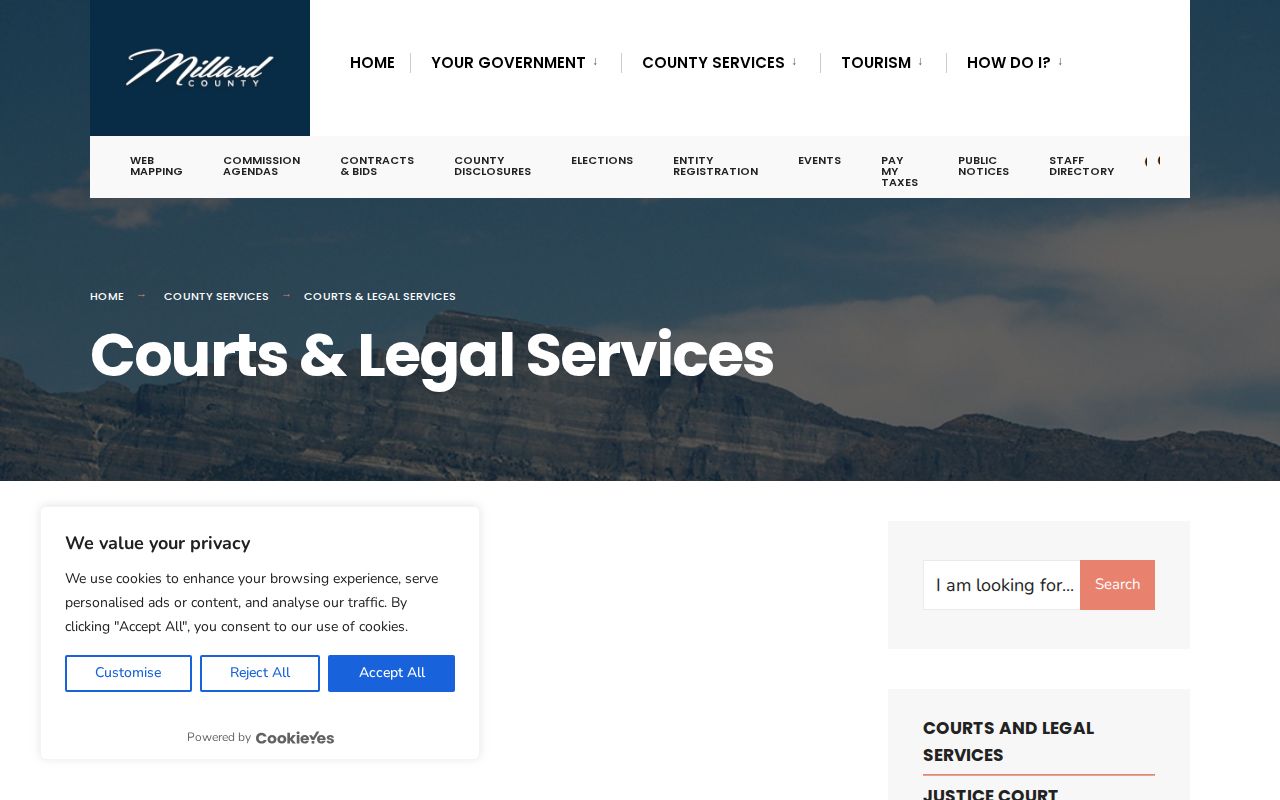
Search both tiers when the charge level is unknown. Read each plea and disposition line, the judgment, sentence, and later minute entries. A release order shows legal authority, but jail processing may finish later, so the docket time must not be presented as the actual jail-release time.
The statewide Utah Xchange route provides the court-record entry point.
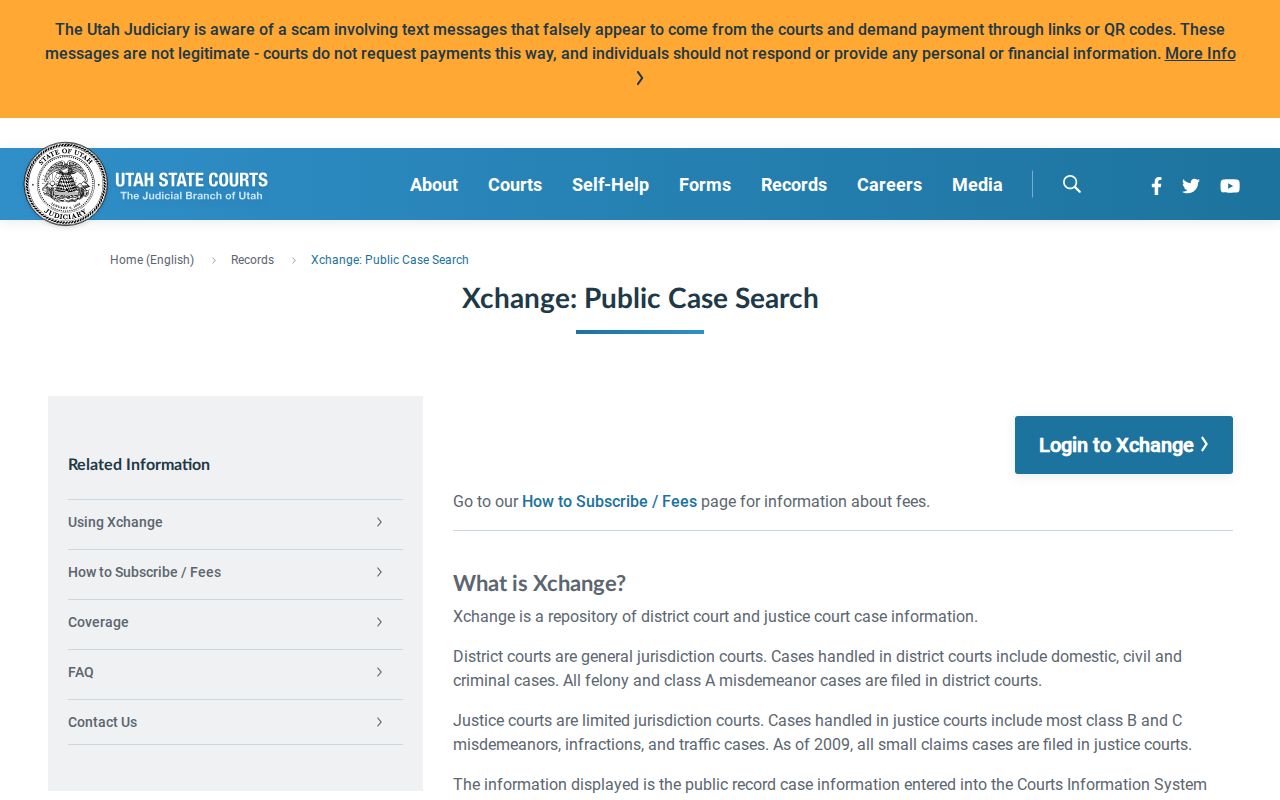
Xchange can preserve the case result after a live custody listing is gone, but it still cannot supply the jail's physical release timestamp.
R-Hope and Millard Release Dates
UDC identifies R-Hope in Millard County as an approved intensive outpatient substance-use program. The official Jail Programs book reports an 18-seat program and 35 successful transitions in fiscal year 2024. This local program matters only for eligible UDC prisoners whose approved case action plan recommends it. Ordinary local detainees do not become UDC earned-time participants merely because they share the Millard County Jail building.
Utah Code § 77-27-5.4 governs UDC earned time. Program completion can affect Board consideration or an existing release date when statutory requirements are met. Attendance alone proves neither completion nor release. The Board can apply, limit, or forfeit credit based on the statute and the person's case. Confirm the individual outcome through the Board order and current UDC record.
Note: R-Hope participation is local context for earned-time review, not proof of a scheduled or completed release.
Millard Release Supervision and Alerts
Utah separates release decisions from community supervision. The Board grants or rescinds parole, while UDC Adult Probation and Parole supervises parolees. A court orders probation. Millard County is served by Region 4's Richfield office, not a listed in-county AP&P office. Read `PAROLE` and `PROBATION` as different legal statuses.
Utah VINE can supplement a Millard County released inmate search by name or offender number. Read the reporting agency, facility, custody status, and any supplied date. A live Millard agency match confirms coverage for that event, but statewide cooperation does not prove that every Millard booking appears. UDC also lists transfer and movement alerts, so a VINE change may mean movement rather than freedom.
- Parole
- Conditional release from a state prison sentence under a Board order.
- Probation
- A community sentence ordered by a court, sometimes after jail.
- Discharge
- The end of the sentence or supervision, distinct from conditional release.
- Detainer
- A basis for another authority to take custody when the present hold ends.
For important confirmation, use VINE with the jail, UDC, Board, or court record. The Board has warned that technical issues may cause missing or wrong notifications. An alert is not the original legal release instrument.
Federal Paths After Millard Release
Federal systems preserve release information in sharply different ways. The BOP Inmate Locator covers federal imprisonment records mainly from 1982 forward. A past release date with no facility, or `RELEASED` and `Not in BOP Custody`, means the person left BOP custody. It does not rule out state, local, immigration, or another federal hold.
ICE's Online Detainee Locator can show current custody and certain released-from-ICE results for 60 days. An older missing result proves nothing. The U.S. Marshals Service has no comparable public release locator for federal pretrial detainees. PACER and District of Utah or USMS contact are the useful paths for a federal court release order. If the Millard record says `released to ICE` or `USMS transfer`, county custody ended, but community release did not necessarily occur.
| Authority | Released-person visibility | Meaning of the result |
|---|---|---|
| BOP | Durable locator record, mainly 1982 forward | Departure from BOP custody only |
| ICE | Released-from-ICE result for a 60-day tail | Departure from ICE custody during that period |
| USMS | No matching public person-level release locator | Use the federal docket and official contact |
Note: A federal receiving agency on the Millard record selects the next locator; it does not prove release home.
Millard Released or Still Held
Each system answers a narrow question. A current-custody roster, when one exists, shows who is still held. A county release record shows how and when one booking ended. UDC covers current state supervision. Xchange explains the court action. Federal locators apply only when federal or immigration custody is part of the chain.
| Situation | Best first source | Required cross-check |
|---|---|---|
| Local Millard booking | Jail phone and release record | District or justice-court docket |
| UDC prisoner | UDC Offender Search | Board decision and effective date |
| Community parole or probation | UDC Location field | Board order for parole or court order for probation |
| Federal sentence | BOP Inmate Locator | Federal docket when needed |
| Immigration custody | ICE locator within its window | ICE records or field-office contact |
Can a missing name prove release? No. Millard has no verified public live roster, and UDC omits people who are fully discharged or outside current UDC supervision. Confirm the completed event with the custodian's record.
Millard County Release Facilities
Millard County Jail is the local booking and detention site, and it also holds some contracted UDC prisoners. Utah State Correctional Facility and Central Utah Correctional Facility serve state-sentenced Millard cases from outside the county. Federal Custody Serving Utah covers USMS and BOP pathways. ICE Custody Serving Utah covers immigration holds and the short released-result window. No federal prison or dedicated ICE detention center was identified inside Millard County.
- Millard County Jail: verify local release with the jail event and court, or UDC transfer and parole through state systems.
- Utah State Correctional Facility: use the statewide UDC search, Board decisions, and VINE.
- Central Utah Correctional Facility: use the same UDC and Board chain; a site move is not release.
- Federal Custody Serving Utah: use BOP for committed prisoners and PACER or USMS for pretrial custody.
- ICE Custody Serving Utah: use ICE's locator promptly, then official records for older events.
Always identify the authority that held legal custody. That choice determines which release date, status, or record can answer the question.
Note: The state and federal facilities listed here serve Millard cases but are not presented as buildings inside the county.